Your first dive trip: what to expect
You've finished your scuba certification, received your certification card, and now you're thinking about diving somewhere warm. Maybe you've been looking at photos of Cozumel or Fiji and wondering what it would be like to spend a week diving there. The idea sounds exciting, but planning your first dive trip can also bring up a lot of questions.
It's normal to wonder if you're experienced enough, what equipment you'll need, or what happens when you arrive. A dive vacation is a little different from the classes you took to get certified, especially when you're traveling somewhere new for the first time.
That's where traveling with an experienced group leader can help. John D. Langlois, a PADI Course Director with more than 30 years in the diving industry, has been leading group dive trips for over 20 years. From the Caribbean to the Red Sea and the Pacific, John has helped divers experience new destinations while keeping the focus on enjoyable, relaxed diving.
If you're considering your first scuba vacation, here's what you can generally expect, from choosing a destination to getting ready for your first dive.
How to Plan Your First Dive Trip
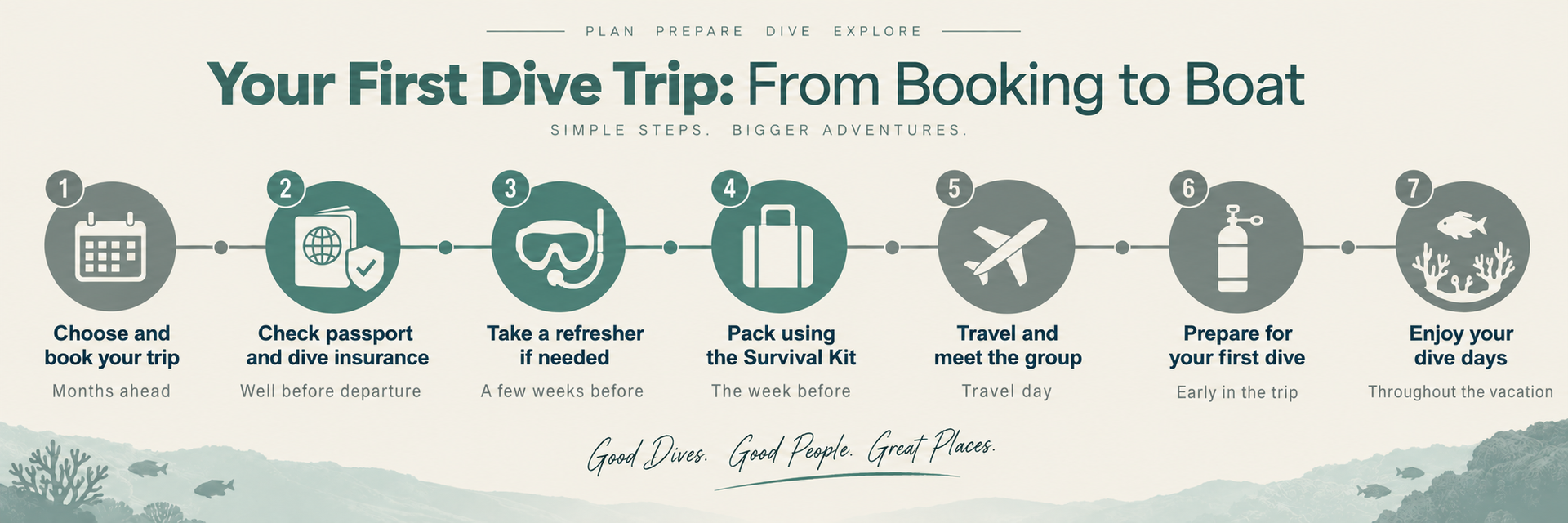
Before booking your trip, you'll want to make sure you have the right certification and feel comfortable with your diving skills. Your PADI Open Water certification is the starting point for recreational dive travel, although some destinations and trips may have additional requirements. If it's been a while since your last dive, taking a PADI Scuba Review can help you practice important skills and get comfortable in the water again. John can also help you understand the experience level needed for a particular trip.
Choosing the right destination is another important part of planning. JDL Global organizes both resort-based trips and liveaboard vacations. A resort trip allows you to stay on land and head out for dives during the day, while a liveaboard involves staying aboard a boat that travels between dive sites. For someone planning their first dive vacation, a resort-based trip may be a more comfortable place to start. John's scheduled trip to Cozumel in April 2027 is one option to consider, along with upcoming trips to Fiji and Roatán. Cozumel is known for drift diving, where the current carries divers along the reef, so it's worth asking John about the diving conditions and experience requirements.
It's also helpful to understand what your trip includes before reserving a spot. Travel arrangements, accommodations, diving activities, and costs can vary by destination. Review the individual trip details and ask John about anything you're unsure of, including equipment options. You'll also want to check your passport requirements and consider dive insurance, such as coverage through Divers Alert Network (DAN). Taking care of these details ahead of time makes preparing for your vacation much easier.
Getting Ready for the Trip and Travel Day
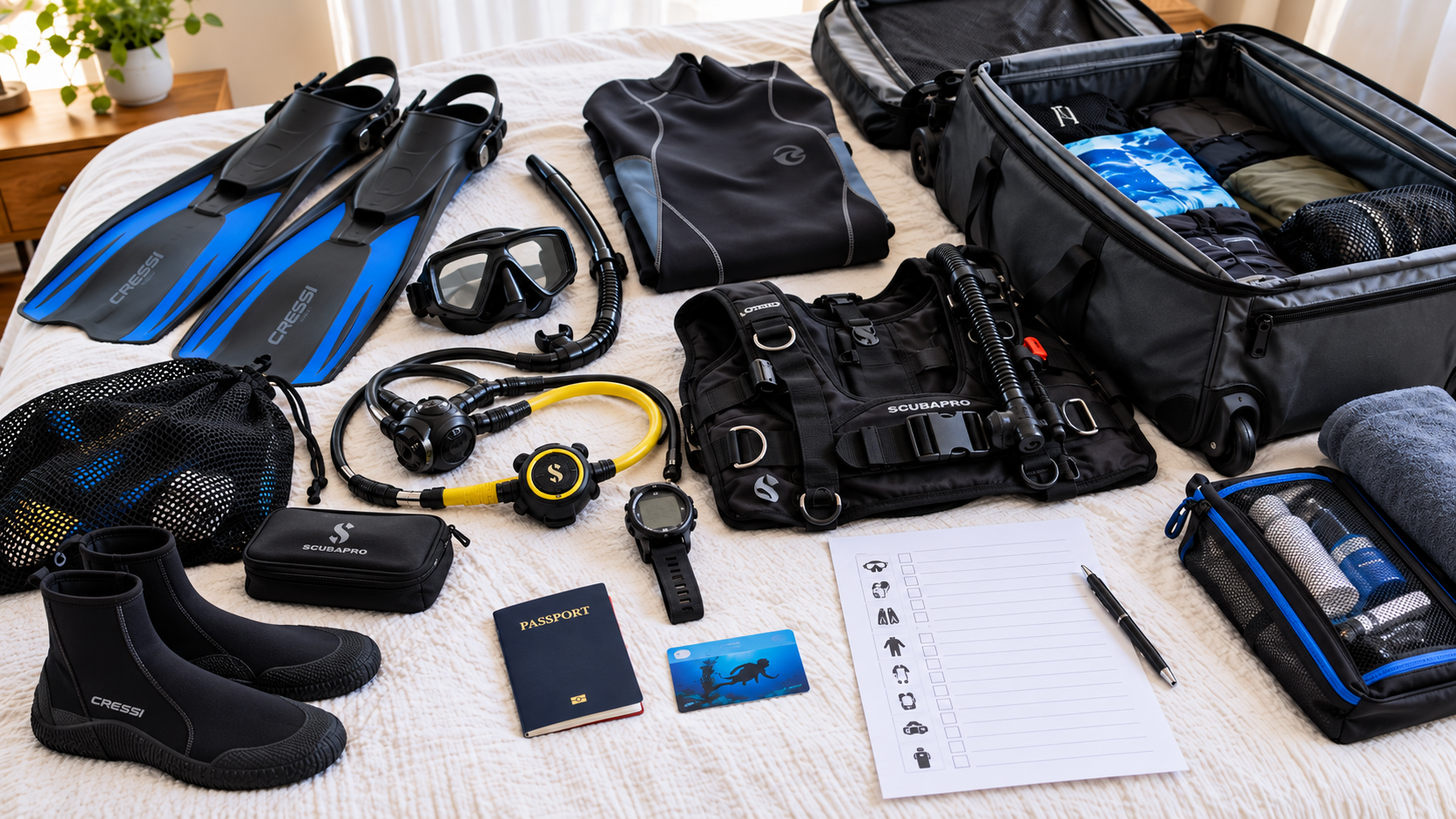
Packing for a dive vacation takes a little more planning than a regular trip, but you don't need to make it complicated. John provides a printable Dive Travel Survival Kit to help travelers organize their equipment, personal items, and important documents. It's useful to go through the list several days before leaving rather than waiting until the night before. Your certification card, dive log, passport, mask defog, and small spare parts are all things you'll want to remember. Depending on the equipment you're bringing, you may also want to keep important items, such as your regulator and dive computer, in your carry-on bag.
Traveling with a group can make the experience feel more familiar, especially if you've never been on a diving vacation. John organizes group trips and travels with the group, so you're joining other people who share your interest in diving. You may arrive with questions about the destination or what the week will look like, and that's completely fine. There's no need to pretend you've done this before. Asking questions is part of getting comfortable with a new experience.
Once you reach your destination, the first part of the trip is generally about settling in and getting familiar with your surroundings. You'll want to organize your equipment, learn about the diving arrangements, and understand the plans for the coming days. The exact schedule depends on the destination and type of trip. For now, the main goal is to get comfortable and enjoy being somewhere new.
What a Typical Day on a Dive Trip Looks Like
A typical day at a dive resort usually begins with breakfast and getting your equipment ready. Many resorts offer morning boat dives, where divers travel together to different sites. Before entering the water, there's usually a dive briefing explaining the location, conditions, planned depth, and anything else you should know. The briefing is also a good time to ask questions about currents, entry procedures, or anything you're unfamiliar with. Once everyone understands the plan, it's time to get ready and enjoy the dive.
Between dives, you'll have what's called a surface interval, which is simply the time spent out of the water before diving again. This gives you a chance to rest, drink water, and talk about what you've seen. Depending on the resort, afternoons may include more diving, a chance to explore the destination, or time to relax. You don't have to spend every moment of a scuba vacation underwater. Resort trips can also work well for people traveling with partners who don't dive, since there's usually more flexibility to enjoy activities on land.
Liveaboard trips follow a different routine. Because you're staying on the boat, meals, diving, and travel between sites are organized around the boat's schedule. These trips generally offer more opportunities to dive throughout the day and can reach locations farther from shore. John also organizes liveaboard trips to destinations such as the Philippines, Egypt's Red Sea, and Raja Ampat. If you're considering one, he can explain how that experience compares with staying at a resort.
What to Expect on Your First Dive
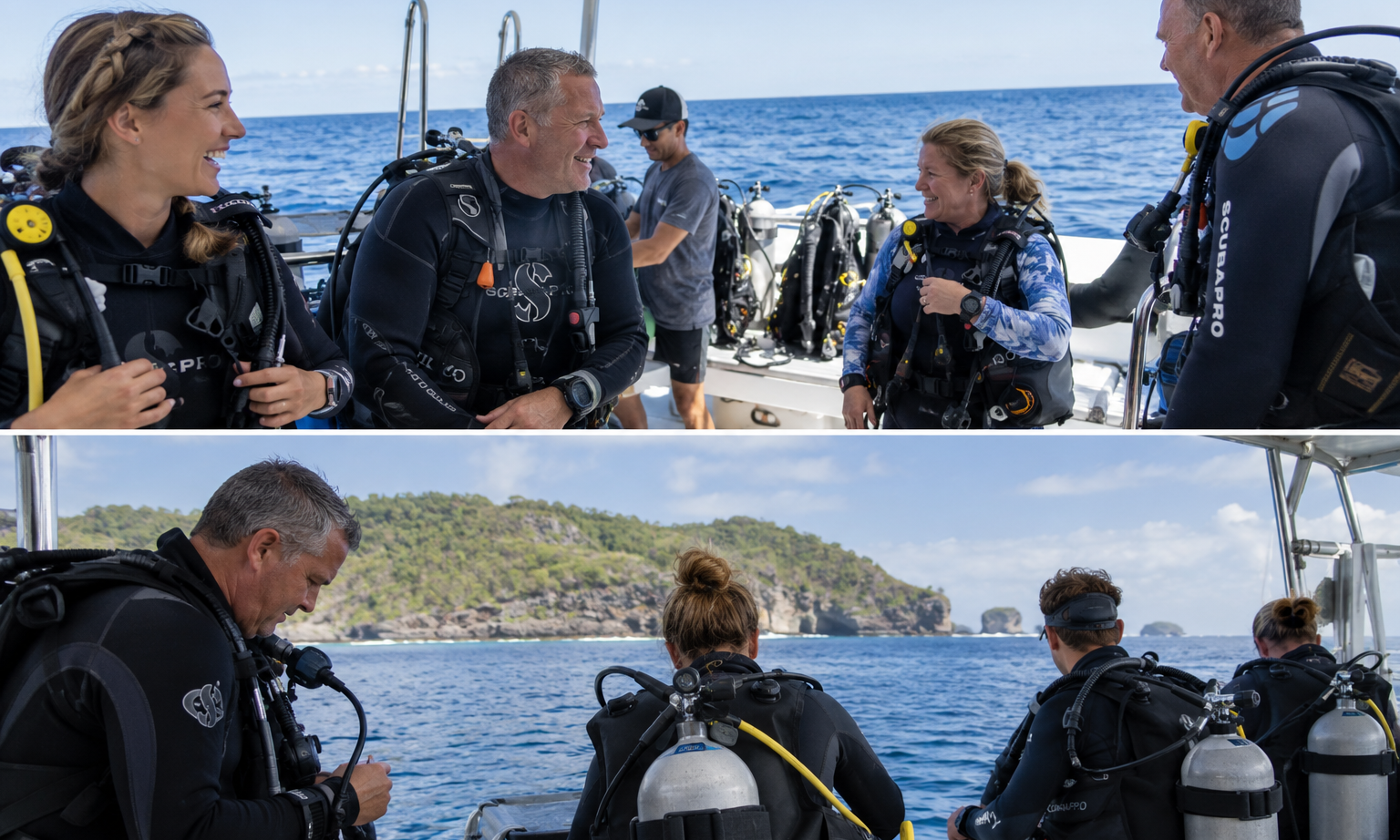
Your first dive at a new destination can feel a little unfamiliar, even after completing your certification. You're getting used to a different boat, new surroundings, and possibly equipment or conditions you haven't experienced before. That's normal. Many dive operators begin a trip with a more relaxed dive that gives everyone a chance to settle in, check their equipment, and get comfortable underwater. The exact plan will depend on the destination, and John can help you understand what to expect before the trip.
During group diving, it's important to know who your dive buddy is and understand the plan before entering the water. Your buddy is the person you stay with and look out for during a dive. Listen carefully to the briefing, check your equipment, and keep an eye on your air supply. You should also know the agreed pressure for signaling when it's time to begin heading back. If the dive is guided, follow the guide's instructions and stay aware of your surroundings. These are skills you learned during certification, and using them becomes more natural with practice.
Most importantly, remember that diving should be enjoyable. If you're nervous, uncomfortable with the conditions, or unsure about something, speak up before getting in the water. You can discuss a different dive plan or decide to sit one out. There's no reason to push yourself into a dive you don't feel ready for. Even experienced divers sometimes choose to skip a dive, and taking things at your own pace is part of becoming more comfortable underwater.
After the Dives and Heading Home
After a day of diving, you'll usually spend some time cleaning and organizing your equipment. It's also a good idea to update your dive log while the details are still fresh. From there, the evening may include dinner, relaxing, and spending time with the rest of the group. One of the enjoyable parts of a group dive trip is getting to know people who share the same hobby. Conversations about the day's dives can become just as memorable as the time spent underwater.
There's also plenty to enjoy beyond scuba diving itself. Some of John's trips combine diving with sightseeing and other activities. His planned Egypt trip in October 2027, for example, includes land touring with visits to the pyramids and Alexandria, along with a Nile riverboat experience. These types of trips give travelers a chance to explore more of a destination, and non-diving partners can participate as well. Each trip is different, which is why it's helpful to review the details before choosing where to go.
As your vacation comes to an end, you'll need time to clean and pack your equipment and prepare for the trip home. Diving also requires planning around your return flight, so follow the appropriate guidance about waiting after your final dive before flying. Your Dive Travel Survival Kit can help you check that everything is packed before leaving. And once you're home, you may already be thinking about the next destination. Some divers decide to continue their training through Advanced Open Water or Enriched Air Nitrox courses, both offered through John's shop.
Ready for Your First Dive Trip?
Your first scuba vacation is a chance to take the skills you've learned and experience diving somewhere new. With the right preparation and an experienced group leader, you can spend less time worrying about the details and more time enjoying the trip.
John has been organizing group diving vacations for over 20 years and can help you explore destinations that fit your interests and experience. If you're ready to start planning, reach out to JDL Global through the Booking Inquirypage to ask John about an upcoming trip. You can also explore the scheduled group tripsor ask about planning a custom vacation.
Common First-Trip Worries and How to Handle Them
What if I get seasick?
Plan ahead with suitable motion sickness options. Sitting near the middle of the boat, watching the horizon, and eating a light breakfast may help.
What if my ears won't clear?
Equalize gently and early during descent. If your ears won't clear, stop descending and move slightly shallower. Never force it.
What if I feel nervous before my first dive?
Tell John and the dive guide how you're feeling beforehand. Ask questions, review the plan, and take your time.
What if I forget something important?
Use the Dive Travel Survival Kit checklist when packing. Check your certification card, dive log, passport, equipment, and personal items before leaving.
What if I use my air faster than other divers?
New divers may use air more quickly. Check your gauge regularly and communicate with your buddy and guide according to the dive plan.
What if I get too much sun or become dehydrated?
Bring reef-safe sunscreen, a hat, and protective clothing. Drink water throughout the day, especially between dives.
Recent Posts