
A Thoughtfully Packed Bag: What to Bring on a Dive Trip
Your trip is getting close, and it's finally time to pull out the dive gear. The wetsuit and fins are easy enough to find, but where did you put your certification card? Do you have spare batteries for your dive computer? And should your regulator go in your suitcase or carry-on?
These are the little details that can make packing more complicated than it needs to be. Having a reliable dive trip packing list helps you keep track of everything, especially when you're traveling with equipment you don't normally bring on vacation.
At JDL Global, John Langlois provides travelers with a printable Dive Travel Survival Kit that covers scuba equipment, personal belongings, and important documents. It's a useful starting point for getting organized without having to remember everything yourself.
If you're still planning your vacation, our guide to your first dive trip explains what the experience is like. For those already counting down the days, here's how to get your equipment packed and ready to go.
The Dive Trip Packing List We Give Every Traveler
John's Dive Travel Survival Kit includes 49 items divided into three categories: dive gear, personal belongings, and travel documents. Some are obvious, like your mask, fins, wetsuit, and passport. Others are easier to forget, such as defog, extra batteries, seasickness medication, and small spare parts. The checklist also leaves room for you to add your own items, since everyone's equipment and travel needs are a little different.
You may not need to bring every piece of scuba equipment you own. Many dive resorts provide tanks and weights, while BCDs and regulators are commonly available to rent. A BCD is the vest that holds your tank and helps you control buoyancy underwater. Some divers prefer bringing their own equipment because they already know how it fits and operates. Masks, fins, boots, and dive computers are especially worth considering. Before deciding what to leave behind, ask John what rental equipment is available for your particular trip.
The easiest way to approach packing is to separate everything into three bags. Your carry-on is for important documents and smaller items you'd rather keep with you. Your checked dive bag holds the bulky equipment, while your regular suitcase is for clothing and personal supplies. This gives everything a place and prevents you from digging through a bag of wetsuits and fins when you need your passport.
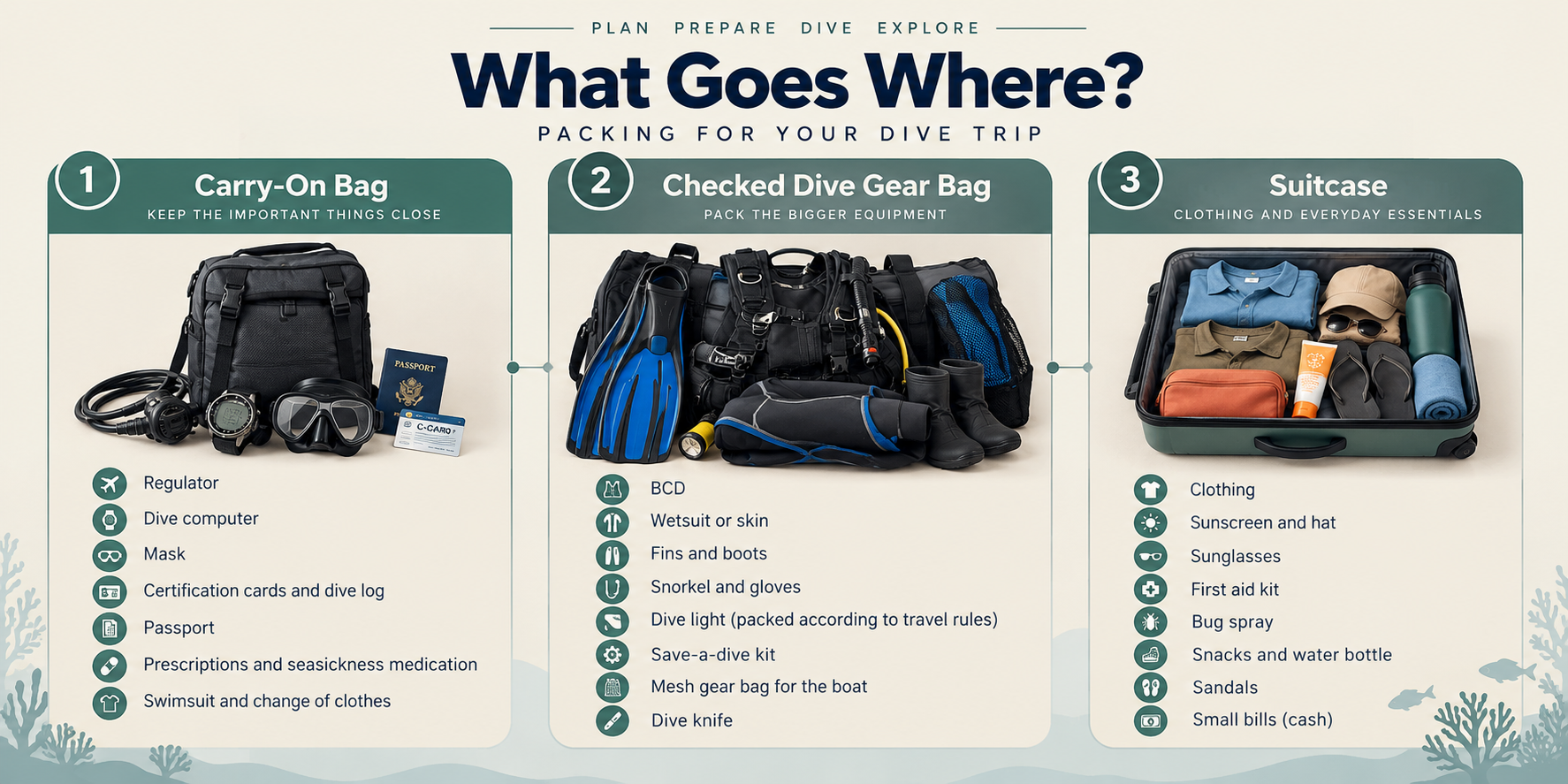
What Belongs in Your Carry-On?
Think about what would be difficult to replace if your checked luggage arrived a day late. For most divers, that includes a regulator, dive computer, and mask. A regulator delivers air from your scuba tank, while your computer tracks information such as depth and dive time. Your mask is worth keeping close because finding another one that fits comfortably isn't always easy. These items aren't especially bulky, so it makes sense to keep them with you when travel rules allow.
Your passport and diving certifications deserve their own spot in the bag. Bring your certification card, also called a C-card, along with your dive log and Nitrox card if you have one. Keeping photos of these documents on your phone gives you a backup, although dive operators may still require the originals. You'll also want your prescriptions, seasickness medication if you use it, and a swimsuit with a change of clothes. Even if your checked suitcase is delayed, you'll have a few basics to get through the first day.
Flying with scuba equipment takes some attention because not everything follows the same baggage rules. Regulators and dive computers are generally suitable for carry-on travel, but dive knives, certain tools, lights, and batteries can have special restrictions. Spare lithium batteries may require carry-on storage and protection against short circuits. Always check the current rules for your airline and airport security before packing. Spending a few minutes checking those details at home is better than having to rearrange your bags at the airport.
Packing the Gear You'll Actually Dive With
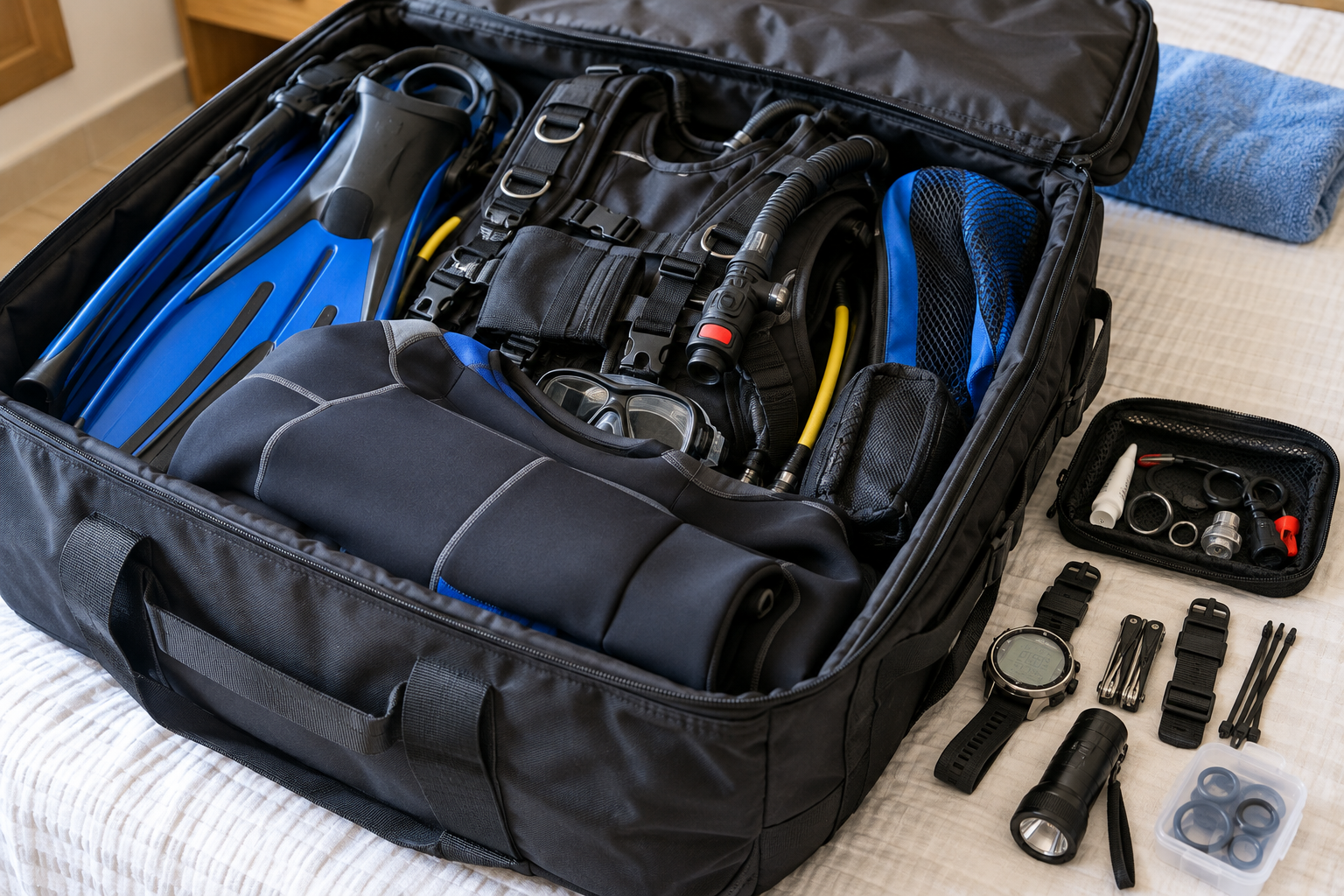
Your checked dive bag will probably be the heaviest piece of luggage you're bringing. A BCD, wetsuit, fins, boots, snorkel, and other accessories can take up quite a bit of room. Instead of pushing everything in wherever it fits, give the larger pieces some structure. Lay the BCD flat, position the fins along the sides, and place the wetsuit over the equipment to provide some padding. Keep smaller accessories together so they're easy to find when you unpack.
It's also worth setting aside space for a save-a-dive kit. This is a small collection of spare parts for the kinds of equipment problems that can interrupt a dive. A broken fin strap or missing O-ring may seem minor, but finding a replacement isn't always convenient when you're away from home. Depending on your equipment, a basic kit could include:
- Spare mask and fin straps
- Compatible O-rings
- An extra regulator mouthpiece
- Zip ties and a small multi-tool
- Replacement batteries for your equipment
The kit doesn't need to be large or expensive. Most of these items can fit into a small pouch, and having them organized is much better than searching through your luggage for a loose part. Pack tools and batteries according to current travel requirements.
Once everything is inside, weigh the bag before heading to the airport. Fins, wetsuits, and BCDs can add up quickly, particularly when packed together. If your luggage is heavier than your airline allows, you may be able to move certain items into your regular suitcase. A small luggage scale can help you sort that out before you're standing at the check-in counter.
Don't Forget the Things You'll Need Out of the Water
It's easy to spend so much time thinking about diving equipment that you overlook the rest of the vacation. You'll still need comfortable clothing, swimwear, toiletries, and something to wear when you're not on the boat. For warm-weather destinations, shorts, T-shirts, sandals, and a few lightweight outfits are usually enough for much of the trip. A hat, sunglasses, and sunscreen are useful when you're spending time outdoors, along with a long-sleeve shirt for added sun protection.
Some of the smaller personal items deserve just as much attention. Seasickness medication is worth considering if boat travel bothers you. Bring any regular prescriptions, basic first aid supplies, bug spray, and a little cash in smaller bills for tips or other expenses. A refillable water bottle is useful throughout the day, and snacks can come in handy between dives. John's Survival Kit also includes vinegar and rubbing alcohol among its traditional packing items. These have been used for ear care by some divers, but anyone with ear concerns should speak with a medical professional before using them.
Your destination and type of accommodation will help determine how much clothing to bring. Resort-based trips, such as JDL Global's vacations to Cozumel, Fiji, and Roatán, give travelers opportunities to enjoy activities on land. You may want a few different outfits for dinners or sightseeing. A liveaboard is different because you're staying aboard a dive boat, where storage space is generally more limited. Quick-drying clothes and a few useful spare parts may be more practical than packing extra outfits. You can review JDL Global's upcoming dive trips to see which type of vacation interests you.
A Final Check Before You Leave & Before You Come Home
About a week before departure, find some room to lay everything out. Put your equipment, travel documents, and personal belongings together so you can see what you have. Print the Dive Travel Survival Kit and work through it as items go into their bags. Checking things off before they're actually packed is an easy way to lose track. This is also a good time to charge your dive computer, inspect your equipment, and make sure you have the batteries and spare parts you need.
Don't overlook the return trip when deciding how to pack. After several days of diving, your equipment may still be damp when it's time to leave. Give everything a good rinse in fresh water and allow it to dry as much as possible. Many dive resorts have places where guests can rinse and hang their gear, so ask about the available facilities when you arrive. If your wetsuit or BCD is still wet when you pack, keep it separate from clean clothing. A suitable bag and towel can help contain moisture during the trip home.
Before checking out, go through your checklist one more time. Look around the room, check where you've been storing your equipment, and make sure smaller items haven't been left behind. Masks, charging cables, dive computers, and accessories are easy to miss when you're packing in a hurry. Once you get home, keep the list with your dive equipment and make a few notes about what you used. You'll have a better idea of what to bring next time, and packing for another trip should take less thought.
Print the List, Pack Your Bag, and Get Ready to Dive
You don't need to bring everything you own on a scuba vacation. Knowing what equipment you'll use, what the destination provides, and where your belongings should go is a good place to start. John's printable Survival Kit gives you a checklist you can work through before leaving and use again on your way home.
If you're preparing for an upcoming JDL Global trip, take a look at the checklist and contact us with questions about your destination or equipment needs. You can also browse the scheduled group vacations or ask about planning a trip that works for you.
Common Dive Trip Packing Mistakes
I Forgot My Certification Card
Keep your C-card, dive log, and passport together. Save backup photos on your phone, but confirm what documents your dive operator requires.
My Mask Keeps Fogging
Bring mask defog and prepare your mask before traveling. Follow the manufacturer's instructions, especially if the mask is new.
My Dive Bag Was Overweight
Weigh your equipment at home. Check your airline's limits and move suitable items between bags if necessary.
I Packed My Dive Light Incorrectly
Check airline and security requirements for dive lights and batteries. Different battery types may have specific packing rules.
A Broken Strap Cost Me a Dive
Bring a small save-a-dive kit with spare straps, O-rings, and other compatible replacement parts.
My Wet Gear Soaked Everything
Rinse and dry equipment when possible. Keep damp items separate from clothing using a suitable bag and towel.
Recent Posts